Good Dog
a short story about robots and revolution


June met Boston on the last day of the war, when it was still unclear who had won. Separated from his comrades, June wandered the desolate streets of the city centre, searching for a place to rest, to hide from the acrid smell of tear gas and gunpowder that wafted everywhere. Eventually he discovered a deserted encampment under a bridge - perhaps he has slept there before, he couldn't remember. He slowly lowered his aching body to the floor, removing his jumper for use as a pillow, despite the autumn chill.
He awoke to the sound of electronic wheezing. Before him stood one of the police dogs, this one the latest model. Its yellow painted body had clearly taken some blows and its visor was heavily scratched - but the sharp blue light of its camera-eyes was still discernible, fixed upon him. Its robotic voice spoke, falteringly: IDENTIFY YOURSELF. June didn't have papers, he had removed his chip. He looked around. Perhaps, if there was something he could hit the thing with then maybe he could escape before it had time to use its taser, but there was nothing. The machine repeated itself: IDENTIFY YOURSELF. THIS IS YOUR FINAL WARNING. June could see the robot’s taser begin to extend itself, releasing electric blue sparks. The robot began a countdown : 5, 4, 3, 2, 1…
Something went wrong. June noticed that the taser was bent at the end. When it fired, the electric charge was trapped within itself. It began to shudder like it was having an epileptic fit. With a huge smack it collapsed on the ground, shook a few more times, then wound down. Its electronic eyes began to fade....
The next morning, a ceasefire was declared. June didn't know it but as the sun rose that morning, the old regime crumbled. When he left the encampment, he took the robot, and dragged it behind him. In the streets some people were cheering, others wailed. Eventually, he bumped into someone he recognised from a political meeting years ago who had a car. He put the dog in the boot and they drove out of the centre.
In the weeks that followed, as the new reality slowly became apparent, June ended up living in an abandoned town house in Islington. The robot sat slumped in the house's small garden shed, covered in a tarpaulin. June couldn't bring himself to take part in the new assemblies that sprung up everywhere, so instead he sat inside and tried not to think about the experience of fighting.
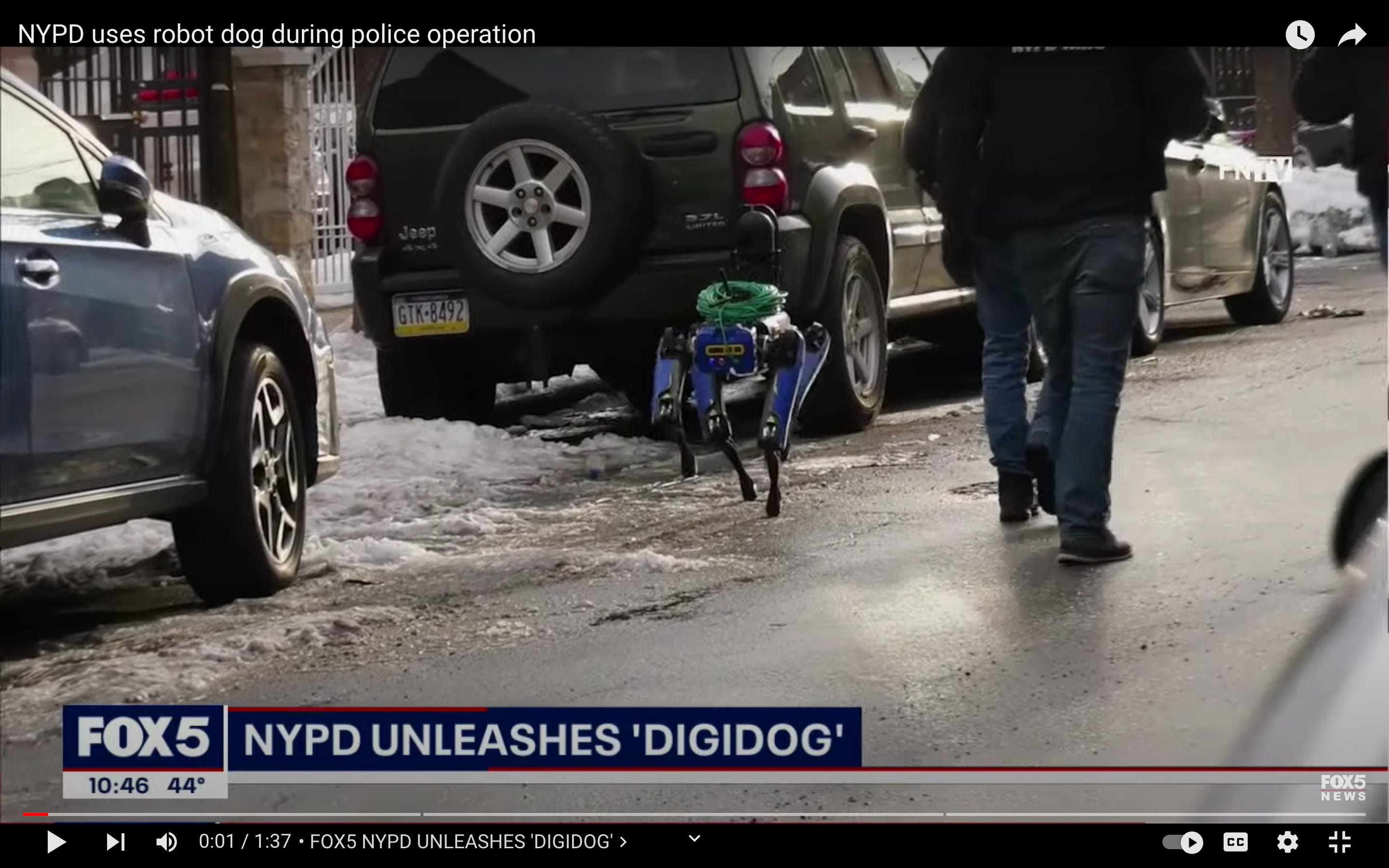
Six months passed; other cities slowly succumbed to the new politics and the forces of reaction began, slowly, to melt away, like paper tigers in the rain. Summer arrived disturbingly early. At a BBQ, June reconnected with an old friend, Daniel, who had trained as an electrician. Over a joint, they relayed stories of the last days of the regime. For the first time, June explained how the robotic dog had ended up in his shed.
The following morning, Daniel came round holding a box of tools. Over the following month, the pair worked, mainly in silence, on repairing the dog. They removed the rusted metallic covering at the back of the dog and found a wire which had fused, melting its plastic casing. After they fixed the circuitry, they found a way to charge it using an adapted hoover plug. However, they were stumped trying to reboot its software. Eventually a breakthrough was reached when Daniel met a partisan who had been involved in raiding a local police station. Most of the files and computers had been burnt along with the station, but others had kept some of them. Daniel found another who had been there and who had kept hold of a manual from Boston Dynamics. Therein, they found the code to reboot the dog's software.
They placed the dog in the centre of the garden, entered the code, and stood as far away as possible. A small, nearly imperceptible, whirring sound began. The dog stood still as though unsure what to do. June remembered the times he had fled in fear from dogs which looked just like this. At one point it tried to unfurl its taser, but it had been removed. It stayed totally still for the rest of the afternoon, leaving them unsure whether they had entered the code correctly. Daniel left as the sun began to go down. His fear finally subsiding, June approached. He began to stroke his hands over the dog’s metallic back. A light came on. Intrigued, June approached from the front, holding out his hand, palm first, as he had been taught to do when approach real dogs as a child. Under the dog's chin, June discovered a sensor he hadn't noticed before. Upon activation, the dog began to walk around, exploring the new territory. Now June froze in terror in the centre of the garden. Eventually the dog returned to him. It looked at him, expectantly.
June would only discover later that the model he had found had been fitted with so-called 'humanising' characteristics. In response to both the police and the army resisting the new machines, the producers had experimented with programming the machines with the features of real dogs. Instead of simply following pre-programmed instructions, these dogs had to be 'taught' what to do. They didn't require food, so instead their training was incentivised by patting, stroking, and verbal encouragement. They couldn't understand human language but they could detect voice pitch, and responded positively to higher pitches and negatively to lower. According to the company, these changes led to a far wider acceptance of the new machinery amongst users, and a marked uptick in morale as the officers and soldiers formed affective attachments to the machines.
Over the following weeks, June would spend a couple of hours an afternoon experimenting. He taught the dog to fetch sticks. He discovered that it was programmed to replicate the movements of its handler; if he dropped to the floor, the dog would crouch, mimicking him. By this means he taught the dog to perform rudimentary dance moves. It would follow him around the garden, tracking his movements. He even named it, Boston – after the company logo peeling on one of its legs.
Eventually he began to wonder if it was getting restless. Sometimes it would stand facing the fence, emitting a low-pitched screech. He took it for a walk. At the end of his road, he came across a group of young people on their way to a meeting of the local community defence group. The dog scared them, and some approached him angrily, demanding to know why he had it. Before he had a chance to explain, the dog inserted itself in front of him, facing the group. It extended what used to be its taser and for the first time since they met June heard it speak: IDENTIFY YOURSELF. Two members of the group stepped forward pulling sticks out of their bag, but June ran away, terrified. A couple of streets away he stopped, crouched in a nearby alley, panting. Then he heard Boston behind him. It bounded round the corner and jumped up at him, pressing itself against June’s face. It stayed with him until he stopped shaking and then walked him home.
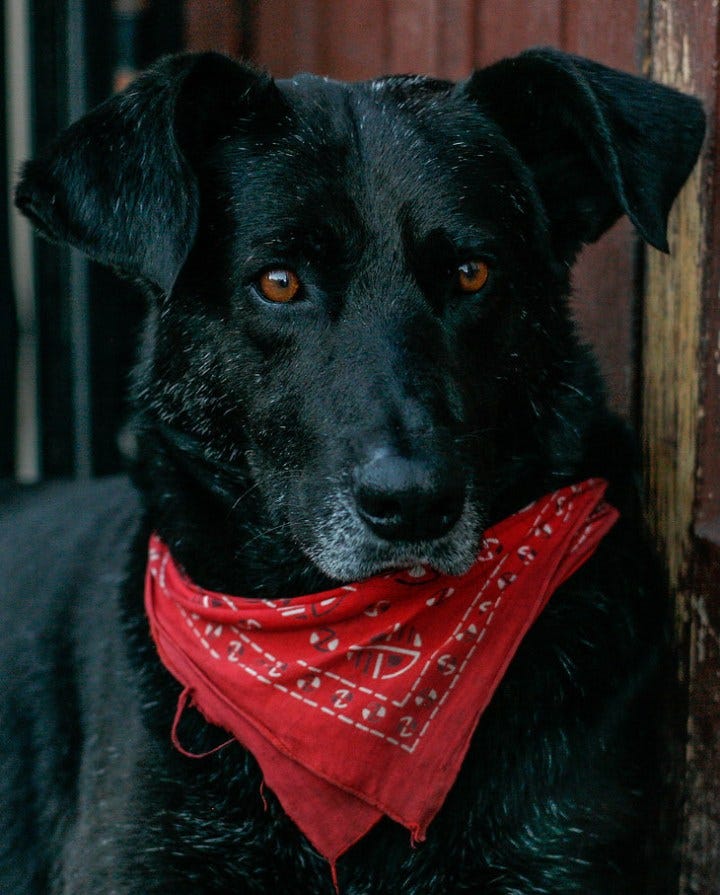
After this event, June began slowly integrating himself into the new society. He joined the same commune as Daniel, where the children loved playing with Boston. For many years he was the happiest he’d ever been. Then the atmosphere began to change. Floods in the west of the country completely destroyed thousands of homes. Re-programmed dogs were used to locate survivors. At the same time, there were rumours that members of the old regime were secretly re-constituting in the countryside and plotting their return. In response, some revolutionaries began advocating for the return of certain aspects of state power. There were huge, acrimonious meetings, in which some people pushed for appropriating the police robots for use by the people’s defence units.
Six months later, a bomb went off in the middle of an assembly, killing 200 and injuring more. Police robot dogs were brought back, their yellow coats over painted with the people’s red.
June’s commune was firmly against these developments, arguing that they constituted a betrayal of the revolution. With other communes they began withdrawing from the people’s assemblies and organising amongst themselves. Other factions saw this act as itself a betrayal of the revolution.
In the early hours of one morning, June awoke to a loud banging noise. Running into the garden, he saw 3 hooded figures disappearing over the wall. Boston lay smashed on the patio, beyond repair.
Elements of Boston were taken and used to replace parts of other machines which had broken. June and Daniel buried the rest of the dog on the top of a nearby hill.
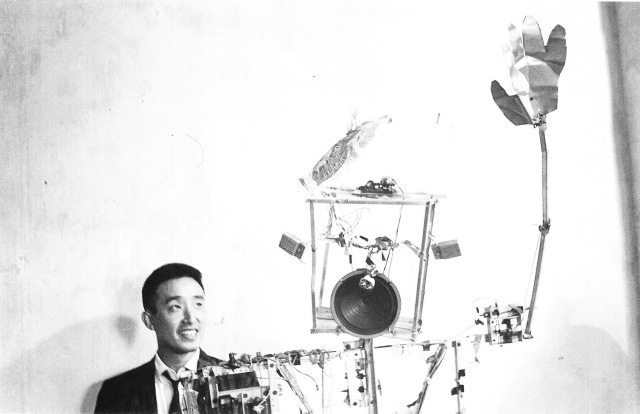
story inspired by discovering Nam Jun Paik’s robots, and considering his desire to ‘humanise’ machines:
I want to read more about Boston and June!